


Unity Game Development Cost in 2026: What Does It Really Take to Build a Game?
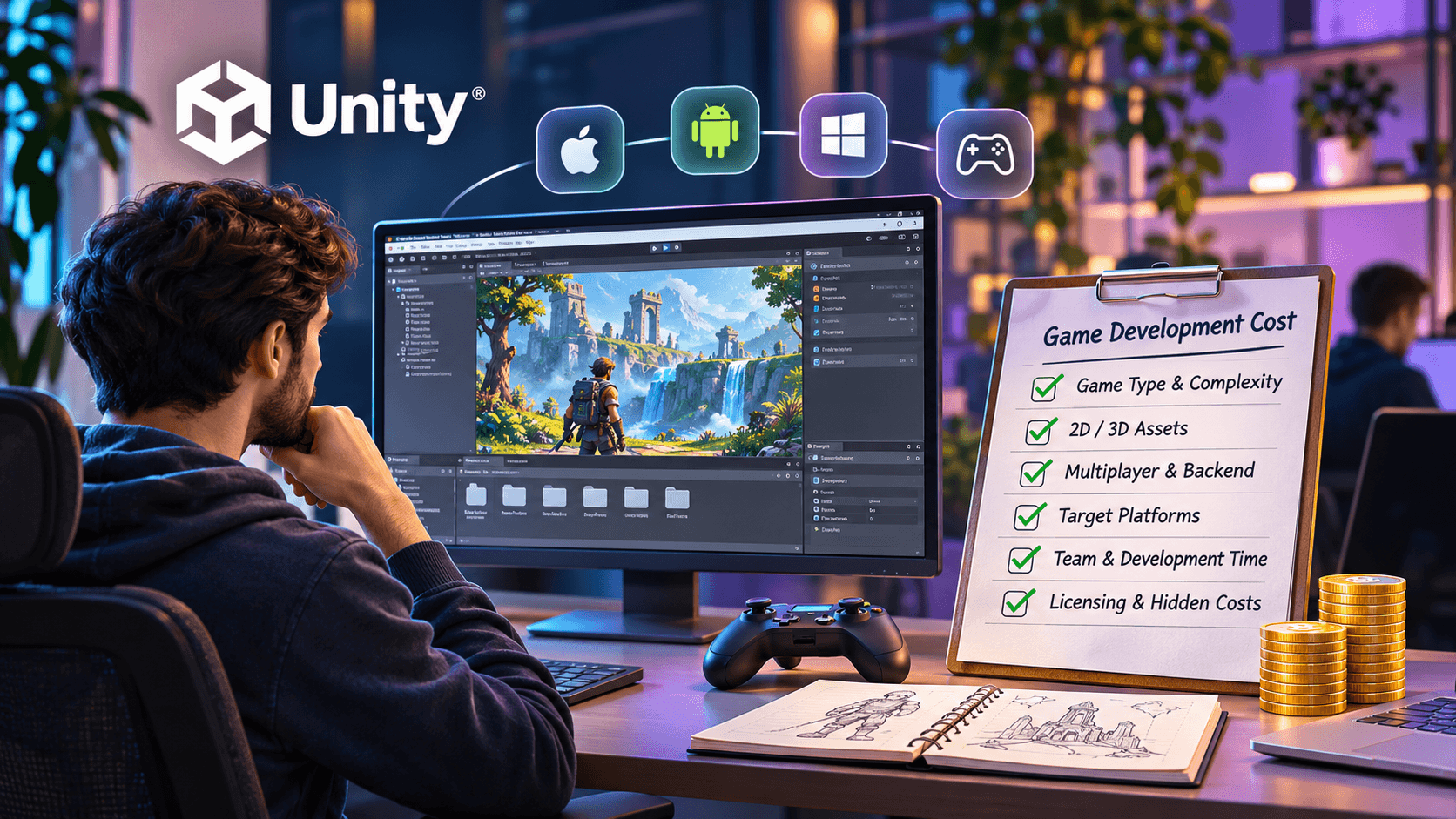
Building a game with Unity can be an exciting opportunity for startups, indie developers, and established businesses. Unity supports 2D and 3D game development, mobile applications, multiplayer experiences, and cross-platform releases. However, before investing in a game idea, one important question needs an answer: How much does Unity game development actually cost in 2026?
The answer depends on more than the game engine. A simple 2D puzzle game requires a different budget from a detailed 3D adventure, an online multiplayer game, or a live-service title with regular updates.
Development costs also depend on gameplay mechanics, graphics, animation, backend infrastructure, developer experience, testing requirements, and target platforms.
In this guide, we break down Unity game development costs in 2026, explain what affects your budget, explore typical project timelines, and highlight expenses that are often overlooked.
Whether you are planning a small mobile game or a larger commercial project, this breakdown will help you understand what it takes to turn your idea into a playable product.
How Much Does Unity Game Development Cost in 2026?
Unity game development can cost anywhere from a few thousand dollars for a basic prototype to several hundred thousand dollars or more for a complex commercial game.
For early budgeting, the following ranges can help you understand the difference between project types. These are broad planning estimates in USD, not fixed market prices or project quotations.
1. Basic Unity Game Prototype: $5,000–$15,000
A prototype is an early version of a game designed to test its central idea and gameplay mechanics.
It may include:
- One or two core gameplay mechanics.
- Basic player movement and controls.
- A simple playable environment.
- Placeholder graphics or limited custom assets.
- Basic user interface elements.
- A test build for internal evaluation.
A prototype is useful when you want to validate whether your game concept works before investing in full production.
For example, a startup planning a new puzzle game can build a prototype to test its mechanics, difficulty, and user experience before developing dozens of levels.
2. Simple 2D or Casual Game: $15,000–$50,000
A simple 2D or casual game generally has limited gameplay complexity, a smaller number of assets, and straightforward progression systems.
The development budget may cover:
- Custom 2D graphics and animations.
- Multiple levels or game stages.
- Player progression and scoring.
- Menus and user interface.
- Basic sound effects and music.
- Save functionality.
- Initial testing and optimization.
A casual game may be relatively affordable when its mechanics are simple and the content requirements are controlled.
However, adding more levels, characters, game modes, or monetization features can increase the development effort.
3. Simple 3D or Mid-Scope Game: $30,000–$100,000+
A 3D game typically requires additional work in modeling, texturing, animation, lighting, and environment creation.
Depending on the gameplay, it may include:
- Custom 3D characters and environments.
- Character movement and interaction systems.
- Animation and visual effects.
- Camera controls.
- Physics and collision systems.
- Multiple gameplay environments.
- Sound design and user interface.
- Performance optimization.
The cost can increase significantly when a project requires realistic graphics, complex animations, advanced AI, or large environments.
4. Multiplayer Unity Game: $75,000–$250,000+
Multiplayer development introduces technical requirements that do not exist in most offline games.
Alongside gameplay development, the team may need to build or integrate:
- Player authentication.
- Matchmaking systems.
- Real-time communication.
- Multiplayer synchronization.
- Backend APIs and databases.
- Player profiles and progression.
- Leaderboards and rankings.
- Server infrastructure.
- Security and anti-cheat mechanisms.
- Multiplayer testing and load testing.
The actual cost depends heavily on the number of players, networking architecture, gameplay requirements, and expected server capacity.
A basic turn-based multiplayer game is usually less demanding than a real-time competitive game that requires frequent synchronization and low latency.
5. Large-Scale or Feature-Rich Unity Game: $250,000–$1 Million+
Large commercial projects can require extensive development teams, detailed environments, complex gameplay systems, and long production schedules.
These projects may include:
- Large 3D environments.
- Advanced character and AI systems.
- Multiple game modes.
- Complex progression and economy systems.
- Multiplayer functionality.
- Custom backend architecture.
- Cross-platform support.
- Extensive QA and performance testing.
- Live operations and post-launch content.
Some large-scale productions can exceed this range, particularly when they require years of development, substantial content production, or continuously operating online services.
Important: These estimates are intended for initial planning. Your actual budget should be calculated after defining the game's features, platforms, content volume, quality expectations, and technical requirements.
What Factors Affect Unity Game Development Cost?
Two games built with Unity can have completely different budgets, even when both target the same platform.
The following factors usually have the greatest impact on development costs.
1. Game Type and Gameplay Complexity
The type of game determines how much engineering, design, and content production is required.
A basic puzzle game may need relatively straightforward logic and limited assets. A 3D action game may require character controllers, combat systems, enemy AI, physics, animations, and complex environments.
More advanced gameplay systems generally require additional development and testing time.
2. 2D vs. 3D Graphics and Asset Production
Graphics and visual content can represent a significant portion of a game development budget.
A 2D game may use sprites, backgrounds, and simple animations. A 3D game may require modeling, rigging, texturing, lighting, and animation for characters and environments.
The cost also depends on the visual style.
For example, a stylized low-poly game may require less asset production effort than a realistic 3D game with detailed characters and environments.
Using existing assets can reduce initial production time, but custom assets may be necessary to achieve a distinctive visual identity.
3. Number of Features and Game Modes
Every additional feature introduces development, integration, and testing requirements.
Consider some common features:
- Character customization.
- Inventory management.
- Skill and upgrade systems.
- Multiple game modes.
- In-game currencies.
- Achievements and rewards.
- Leaderboards.
- Social features.
- In-app purchases.
- Advertising integration.
A game with one core gameplay loop will usually require less development effort than a game with several interconnected systems.
Prioritizing essential features can help keep the initial budget under control.
4. Target Platforms
A Unity project can target several supported platforms, including Android, iOS, PC, and consoles.
However, supporting multiple platforms does not mean every release will require zero additional work.
Developers may need to adjust:
- User interface layouts.
- Input and control systems.
- Device performance settings.
- Screen resolutions and aspect ratios.
- Platform-specific integrations.
- Store requirements.
- Hardware compatibility.
For example, a mobile game may use touch controls, while a PC version needs keyboard, mouse, and controller support.
Cross-platform development can improve market reach, but the additional testing and platform-specific work should be included in the budget.
5. Multiplayer and Backend Requirements
Multiplayer functionality is one of the most important cost considerations.
An offline game may store player progress locally. An online multiplayer game may require authentication, matchmaking, data synchronization, server communication, and persistent player information.
The backend also needs to support the expected number of users.
A system designed for a small group of testers may not be suitable for thousands of concurrent players.
If your project involves online gameplay, read our guide on the multiplayer game architecture problem to understand why server architecture and scalability matter.
6. Developer Experience and Team Size
The cost of Unity development also depends on who builds the game.
A project may require:
- Unity game developers.
- Game designers.
- 2D or 3D artists.
- Animators.
- Backend developers.
- UI/UX designers.
- QA testers.
- Project managers.
A small project may be completed by a compact team, while a complex multiplayer game needs specialists across several disciplines.
Developer rates also vary by experience, location, engagement model, and technical specialization.
Unity Game Development Cost Breakdown: Where Does the Budget Go?
Understanding the main cost categories helps you evaluate development proposals and avoid unexpected expenses.
Game Design and Pre-Production
Before development begins, the team needs to understand the game concept and define how it will work.
This phase may include:
- Game concept development.
- Gameplay mechanics.
- Game Design Document (GDD).
- Technical feasibility assessment.
- Feature prioritization.
- Initial project planning.
A clear pre-production process reduces uncertainty and helps prevent expensive changes during development.
Programming and Game Mechanics
Programming covers the systems that make the game functional.
Depending on the project, this may include:
- Player movement and controls.
- Gameplay logic.
- Physics and collision detection.
- AI behavior.
- Level progression.
- UI interactions.
- Save systems.
- Platform integrations.
More complex gameplay mechanics generally require more engineering time.
Art, Animation, and Audio
Visual and audio production can require substantial resources, especially for 3D games.
The team may need to create characters, environments, animations, sound effects, music, and visual effects.
The number of unique assets and their required quality can significantly affect the budget.
Backend and Infrastructure
Backend development is necessary when a game needs online functionality or persistent player data.
Possible requirements include:
- User accounts.
- Cloud saves.
- Matchmaking.
- Leaderboards.
- Multiplayer servers.
- Analytics.
- Player databases.
- Admin dashboards.
Hosting and infrastructure costs may continue after launch, depending on usage and architecture.
Quality Assurance and Testing
Testing should not be treated as a final activity that happens only after development.
A game needs to be tested throughout production to identify bugs, gameplay problems, compatibility issues, and performance bottlenecks.
Testing may include:
- Functional testing.
- Gameplay testing.
- Device compatibility testing.
- Performance testing.
- Multiplayer testing.
- Regression testing.
- Release validation.
The more platforms and features a game supports, the more testing effort it may require.
How Much Does Unity Licensing Cost in 2026?
Unity licensing is another budget consideration, but it is important to understand that the engine subscription is not the same as the total cost of developing a game.
According to Unity's official 2026 pricing information:
Unity Personal
Unity Personal is free for eligible users and is available to customers within the stated annual revenue and funding threshold of $200,000.
Unity Pro
Unity Pro is listed at $2,310 per year per seat when paid annually, or $210 per month per seat when paid monthly.
Unity Pro is required for businesses exceeding the applicable $200,000 annual revenue or funding threshold.
Unity Enterprise
Unity Enterprise uses custom pricing and is required for businesses exceeding the applicable $25 million annual revenue or funding threshold.
These requirements and prices are subject to Unity's current terms, eligibility rules, regional taxes, and subscription changes.
Before starting a commercial project, review the official Unity plans and pricing and Unity's 2026 pricing updates.
Also remember that your budget may include additional tools, plugins, third-party assets, backend services, and development infrastructure.
How Long Does It Take to Build a Unity Game?
Development time directly affects the total project budget because a longer production schedule generally requires more developer and team hours.
A basic prototype may take around 4–8 weeks, depending on its requirements.
A simple 2D or casual game may require approximately 2–6 months.
A mid-scope 3D game may take around 4–10 months.
A multiplayer game may require 6–12 months or longer, depending on networking, backend, and gameplay complexity.
Large-scale commercial projects can take a year or several years to complete.
These are indicative planning timelines, not guaranteed delivery dates. Art production, feature changes, technical challenges, and testing requirements can all affect the schedule.
Hidden Costs You Should Include in Your Unity Game Budget
Some expenses are easy to overlook when calculating the initial development cost.
However, ignoring them can create problems after production begins.
1. Third-Party Assets and Plugins
Unity Asset Store packages, plugins, tools, and other third-party resources may require separate purchases or subscriptions.
The cost depends on the assets and licenses your project needs.
2. Server Hosting and Backend Maintenance
Online games may require continuous infrastructure to support player accounts, matchmaking, multiplayer sessions, and stored data.
As the player base grows, hosting and backend expenses may also increase.
3. App Store and Platform Requirements
Publishing a game may involve developer account fees, platform-specific requirements, compliance checks, and submission preparation.
Console development can also involve additional access, hardware, and approval requirements.
4. Marketing and User Acquisition
Building a game does not automatically attract players.
You may need a separate budget for promotional videos, social media campaigns, advertising, community management, and user acquisition.
Marketing should be planned independently from the development budget.
5. Post-Launch Maintenance
After release, the game may need bug fixes, compatibility updates, performance improvements, security updates, and new content.
If the game operates as a live service, regular updates and ongoing support can become a major recurring expense.
A realistic project budget should account for these costs rather than treating launch as the end of development.
How to Reduce Unity Game Development Costs Without Sacrificing Quality
Reducing development costs does not mean removing important features or compromising the player experience.
A better approach is to manage scope and prioritize development work.
Start With an MVP
Build a Minimum Viable Product (MVP) that includes the essential gameplay experience.
Instead of developing every planned feature immediately, focus on the mechanics that define the game.
This helps validate the concept before committing to a larger production budget.
Prioritize Features
Separate essential features from optional improvements.
For example, a basic mobile game may initially need gameplay, progression, menus, and save functionality. Advanced customization, social features, and additional game modes can be introduced later.
Use Existing Assets Where Appropriate
Unity's Asset Store provides ready-made assets, tools, and plugins that may reduce development time.
However, check compatibility, quality, licensing, and customization requirements before using third-party resources.
Plan for Cross-Platform Development Early
If you intend to release on Android, iOS, and PC, include those requirements during the initial architecture and design stages.
Adding platforms late in development may require significant changes to controls, UI, integrations, and testing.
Test Early and Regularly
Finding technical problems early is generally easier than fixing them after the game becomes more complex.
Regular testing helps reduce rework and improves release quality.
Choose the Right Development Team
An experienced team can help you make better technical decisions, avoid unnecessary complexity, and prioritize features according to your budget.
If you need additional expertise, you can explore Unity developers at WebBuggs.
Unity vs Unreal Engine: Which Is More Cost-Effective?
Unity and Unreal Engine both support professional game development, but their strengths and workflows differ.
Unity is commonly considered for mobile games, 2D projects, cross-platform applications, and projects that benefit from its development ecosystem.
Unreal Engine is often considered for visually demanding 3D games, advanced rendering workflows, and projects that need its specialized tools.
Neither engine is automatically cheaper for every project.
The final cost depends on the team's experience, game requirements, asset pipeline, performance targets, and development workflow.
For a detailed comparison, read our guide on Unity vs Unreal Engine in 2026.
The best engine is the one that allows your team to build, release, and maintain the intended game efficiently.
What Does a Unity Game Development Team Actually Deliver?
A professional development team should provide more than a playable build.
Depending on the agreed scope, a full-cycle Unity project may include:
- Project discovery and technical planning.
- Game design and prototyping.
- Gameplay programming.
- Art and animation integration.
- UI/UX implementation.
- Backend and multiplayer development, where required.
- Platform-specific builds.
- QA and performance optimization.
- Release preparation.
- Documentation and project handover.
- Agreed post-launch support.
For an example of a complete production journey, explore the Logistics Battalion Steam Game case study. It highlights stages such as concept refinement, prototyping, full development, Steam integration, testing, launch, and live operations.
Frequently Asked Questions About Unity Game Development Cost
How much does it cost to develop a simple Unity game?
A simple Unity game may cost approximately $15,000–$50,000, depending on gameplay mechanics, art requirements, features, and target platforms. A basic prototype can cost less, while a more polished commercial release may require a larger budget.
Is Unity free to use for game development in 2026?
Unity Personal is free for eligible users within the applicable revenue and funding threshold. Businesses exceeding the relevant threshold may need Unity Pro or another subscription. Always review Unity's current licensing requirements before starting a commercial project.
How much does it cost to hire a Unity game developer?
The cost depends on experience, location, specialization, and engagement model. A dedicated developer may be suitable for ongoing work, while a full development team is often more appropriate for projects requiring programming, art, backend development, and QA.
How long does it take to develop a Unity game?
A basic prototype may take 4–8 weeks, while a simple game may require several months. Multiplayer and large-scale games can take a year or longer, depending on their complexity and content requirements.
Is Unity suitable for multiplayer game development?
Yes. Unity can be used to build multiplayer games, but the project also needs an appropriate networking solution, backend architecture, synchronization, security, and testing strategy.
Does Unity support both Android and iOS game development?
Yes. Unity supports development for Android and iOS. However, developers still need to handle platform-specific requirements, device testing, performance optimization, and store submission.
What is the biggest factor affecting Unity game development cost?
Project scope is one of the biggest cost drivers. Gameplay complexity, custom art, multiplayer functionality, target platforms, and content volume all influence the time and resources required.
Do Unity game development costs include post-launch maintenance?
Not necessarily. Maintenance, server hosting, new content, compatibility updates, and ongoing support may be charged separately. Always confirm what is included in the development agreement.
Final Thoughts
Unity game development costs in 2026 depend on what you want to build, how complex the gameplay is, and how many features your project requires.
A simple prototype or 2D game can be developed with a relatively limited budget, while a feature-rich 3D or multiplayer game requires more engineering, content production, testing, and infrastructure.
The most effective way to control costs is to define your requirements early, prioritize essential features, choose the right development team, and plan for maintenance from the beginning.
If you have a game idea and want to understand its technical requirements, explore our game development services. Our team can help you evaluate the scope, select the right development approach, and plan a realistic budget for your project.
A successful game does not start with the biggest budget. It starts with the right plan, the right priorities, and a development strategy that fits the idea.
Unity Game Development Cost in 2026: What Does It Really Take to Build a Game?
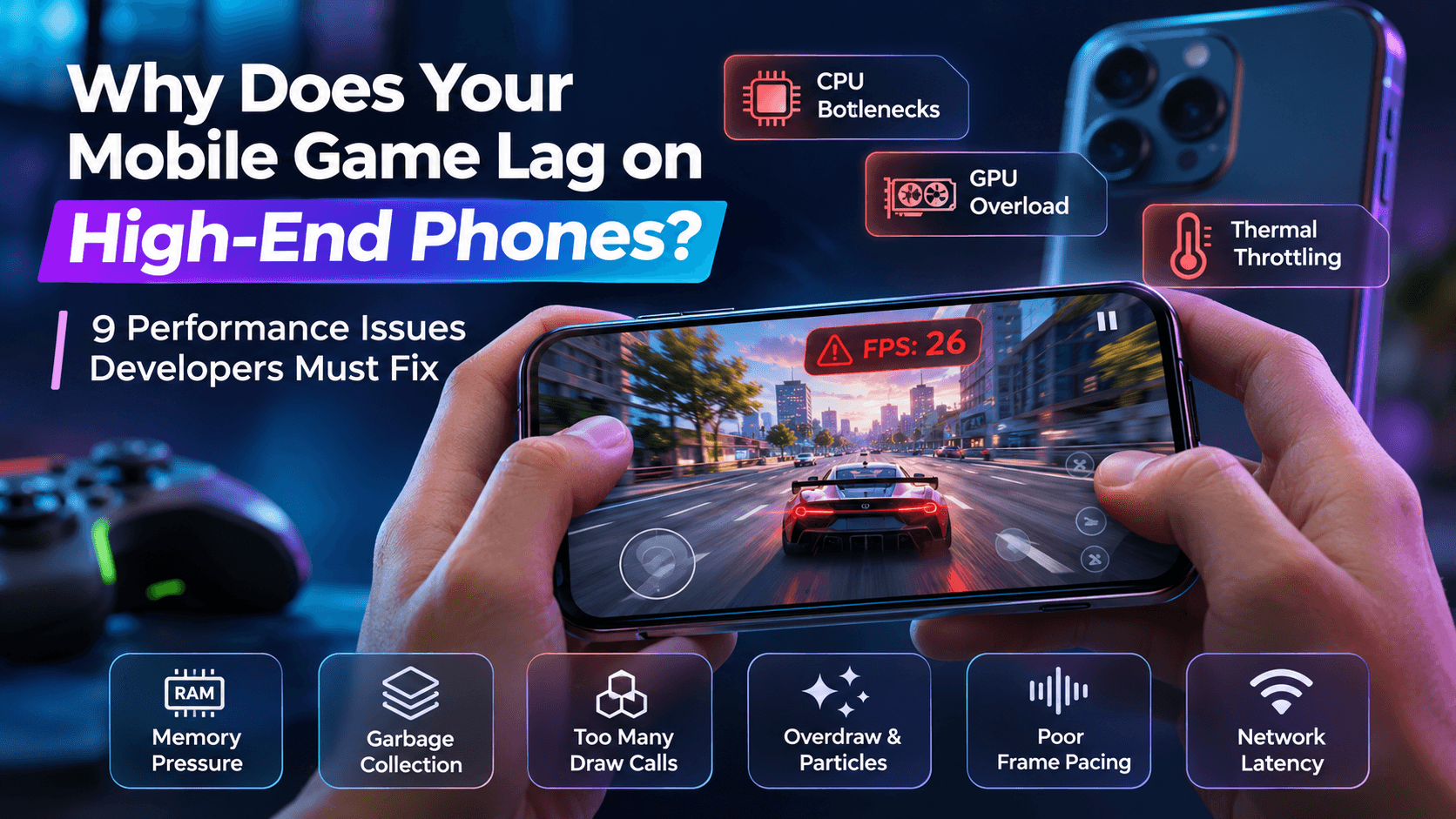
Why Does Your Mobile Game Lag on High-End Phones? 9 Performance Issues Developers Must Fix
