.svg)


Cross-Platform vs. Native App Development: Which Yields Better ROI in 2026
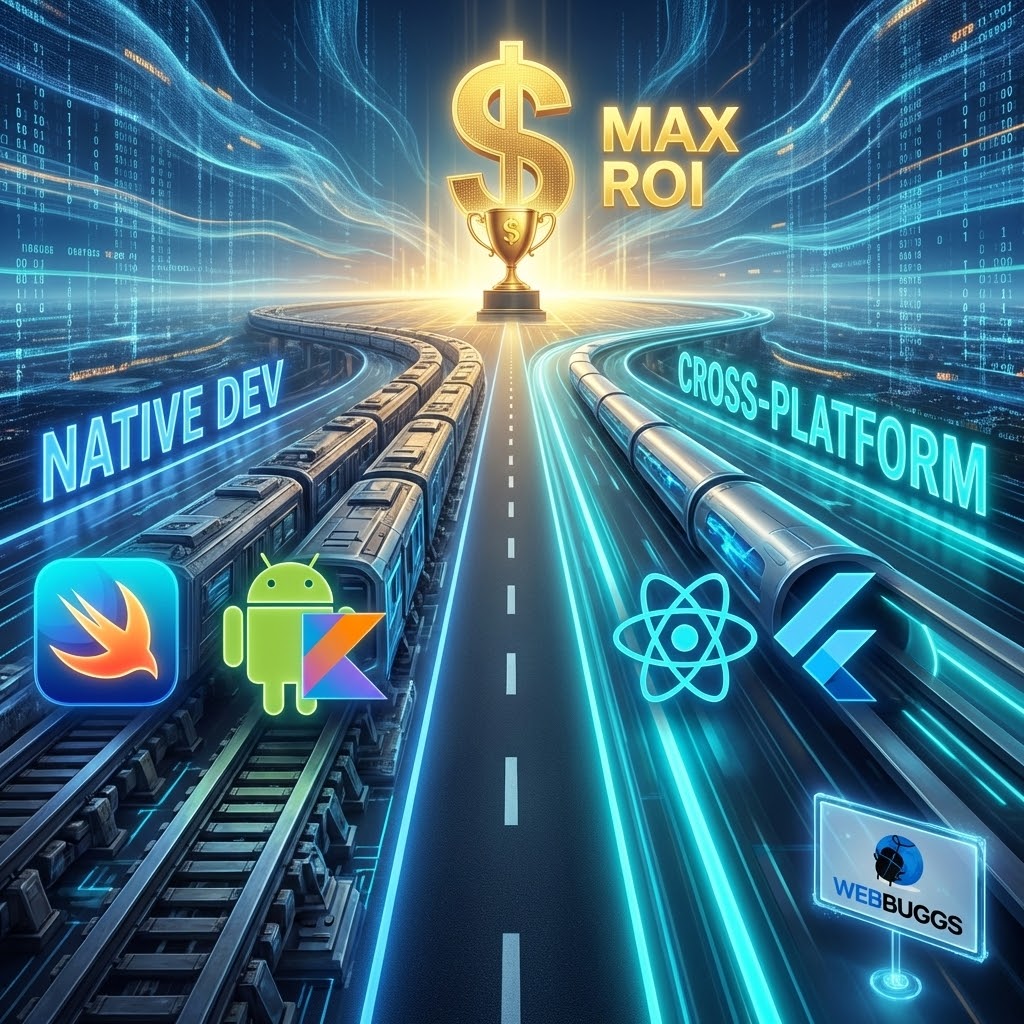
One of the first questions we get from clients looking to build a mobile app is: “Should we build Native or Cross Platform?”
Five years ago, the answer was almost always “Native” if you wanted quality. But in 2026, the landscape has changed dramatically. Frameworks like Flutter and React Native have matured to the point where the line between them and native apps is incredibly blurry.
If you are a startup or an enterprise looking to maximize your return on investment (ROI), here is how to decide.
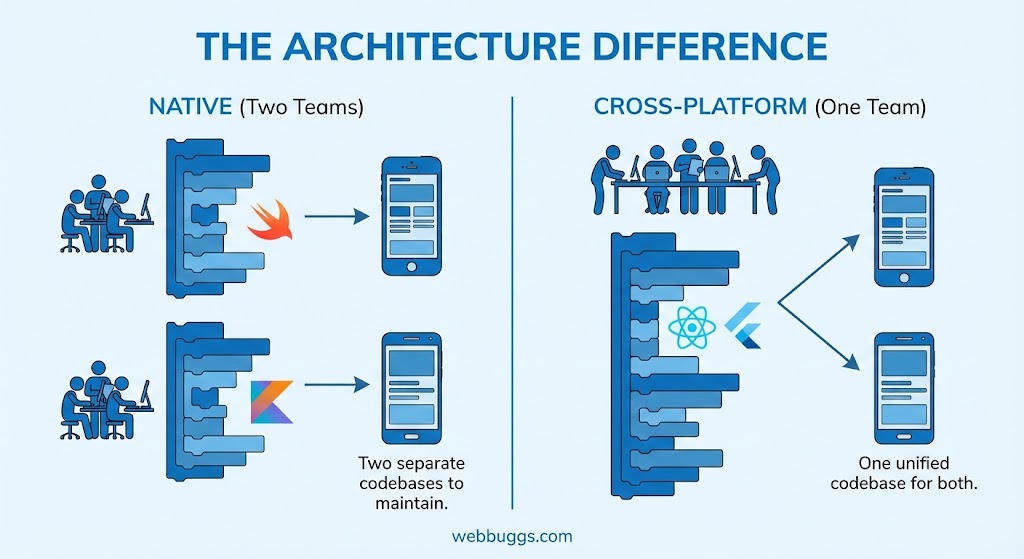
1. Defining the Contenders
• Native Development: Building two separate apps, one using Swift for iOS and one using Kotlin for Android.
• Cross Platform: Building one codebase (using React Native or Flutter) that runs on both iOS and Android.
2. The Cost Factor
Native development effectively requires two development teams. You are paying double the hours for every feature, bug fix, and update.
The ROI winner: Cross Platform.
By sharing up to 90 percent of the code between platforms, development costs are typically 30 to 40 percent lower.
3. Time to Market
Speed is a competitive advantage. In the time it takes to perfect a Swift iOS app, a React Native team can often deploy to both the App Store and Google Play Store.
The ROI winner: Cross Platform.
If you need to test an MVP (Minimum Viable Product) quickly, cross platform is the clear choice.
4. Performance and Heavy Lifting
This is where Native still holds the crown. If your app relies heavily on complex animations, AR or VR features, or intensive background processing (like a high end mobile game), cross platform wrappers can introduce lag.
The ROI winner: Native.
For high performance gaming or complex hardware integration, the investment in Native is necessary to ensure user retention.
5. Maintenance and Scalability
Maintaining two codebases means checking for bugs in two places. When iOS 20 releases, you update the Swift code. When Android updates, you touch the Kotlin code. With cross platform, you largely update one codebase.
The ROI winner: Cross Platform.
Long term maintenance costs are significantly lower.
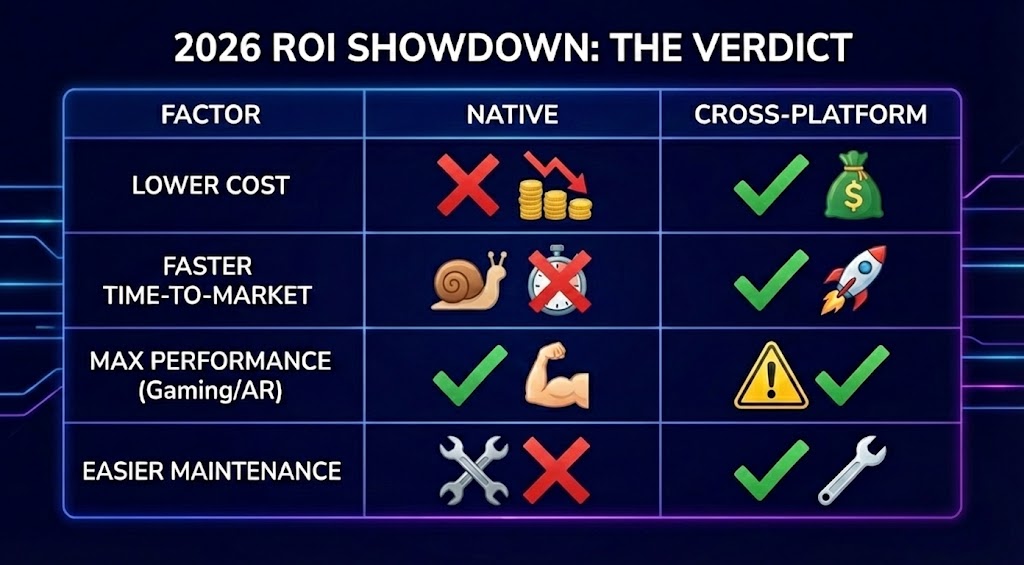
The Verdict for 2026
For 90 percent of business applications such as e commerce, booking apps, social platforms, and SaaS tools, cross platform development (React Native or Flutter) offers the superior ROI. It delivers a near native experience at a fraction of the cost and time.
However, if you are building the next high fidelity mobile game or a specialized hardware app, Native remains the gold standard.
Need help deciding? Webbuggs has expert teams in both Native and Cross Platform technologies. Book a free consultation and let’s discuss which architecture fits your business goals and budget.
.jpg)